
“Antioxidant” is one of the most common words in nutrition, showing up on everything from berries to skincare labels, yet the specific antioxidant mechanisms rarely get explained. This article breaks down three antioxidant compounds and three distinct roles they can play in protecting cells from free radicals.
In This Article
The Problem: What Damages Cells
A free radical is a molecule with an unpaired electron in one of its outer orbitals, which makes it highly reactive as it seeks stability. It stabilizes itself by
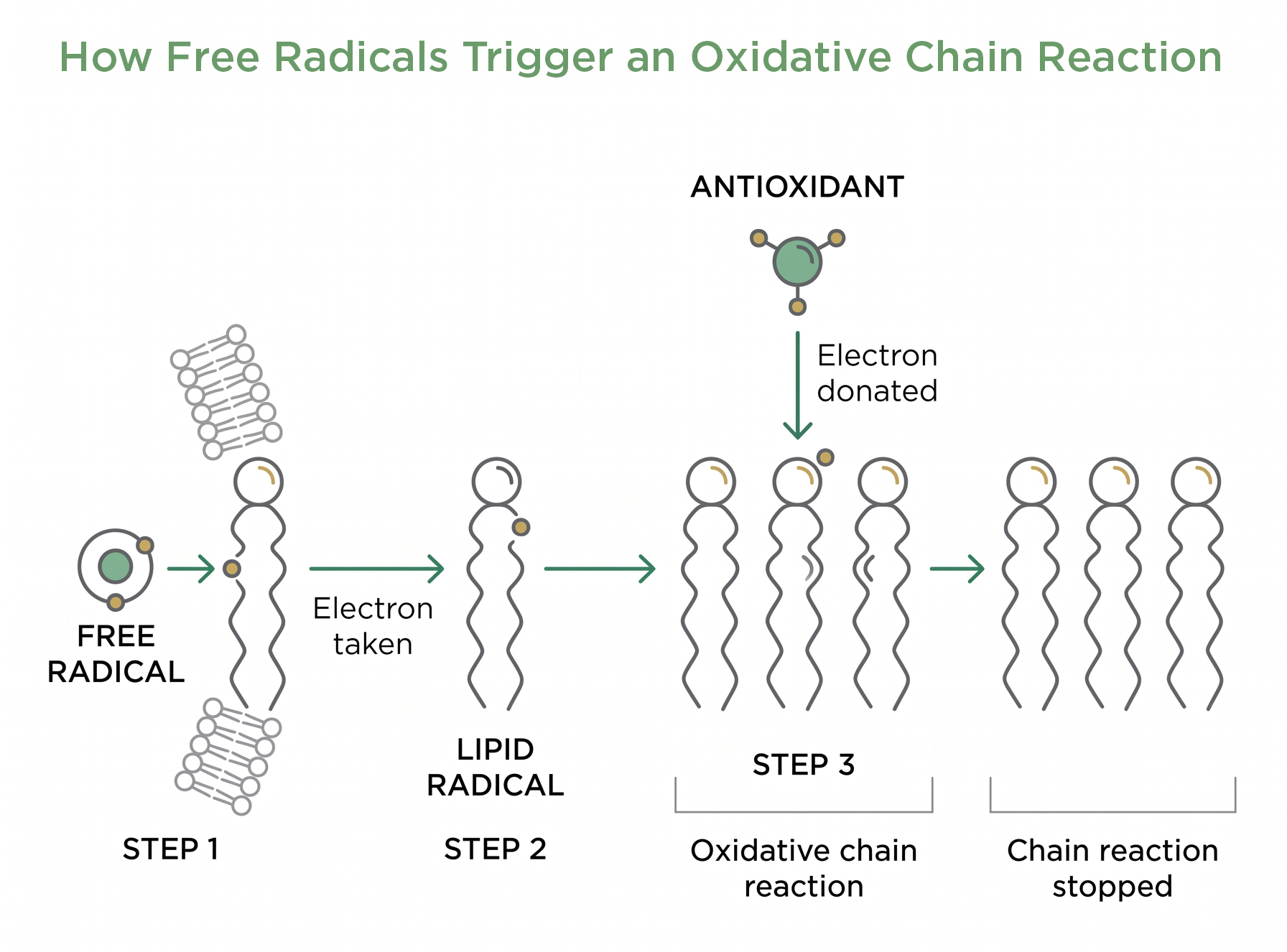 stealing an electron from a nearby molecule, often a fatty acid in a cell membrane, and that fatty acid becomes reactive in turn. The damage passes down the line like a
row of dominoes until two reactive molecules combine or an antioxidant donates an electron and stabilizes a free radical without becoming reactive itself. Left unchecked, this chain reaction can damage proteins, lipids, and DNA inside a cell.
Free radicals form constantly as a normal part of everyday biology. Some are generated internally as a byproduct of ordinary cellular activity. Others come from external sources, including UV light, air pollution, cigarette smoke, and certain foods. Because the body faces free-radical exposure from both internal and external sources, antioxidant defense is an ongoing, everyday process.
The Solution: What an Antioxidant Actually Does
Antioxidants help stop the chain reaction caused by free radicals. An antioxidant can donate an electron to a free radical, stabilizing the molecule and preventing it from taking an electron from another molecule. The antioxidant remains stable after donating the electron, allowing the chain reaction to end.
The body has two complementary antioxidant defense systems. The first is produced internally by the body’s own cells and includes enzymes such as superoxide dismutase, catalase, and glutathione peroxidase. These enzymes help neutralize reactive molecules generated during normal cellular activity. The second comes from outside the body through compounds found in foods and supplements. These compounds can work alongside the body’s internal antioxidant defenses.
The three antioxidants explored in this article illustrate how antioxidant defense can work through different pathways. Quercetin can influence cellular signaling while also directly interacting with reactive molecules. Pomegranate polyphenols can help limit reactions that generate additional free radicals. OPCs can directly intercept reactive molecules and help stop oxidative chain reactions, particularly those involving lipids.
Quercetin and the Inflammatory Switch
Quercetin belongs to a family of plant compounds called flavonoids, found naturally in foods such as onions, apples, and citrus fruit.
Inside cells, a molecular switch called NF-κB (short for nuclear factor kappa B), helps control the expression of genes involved in inflammation. When NF-κB is activated, it can increase the production of inflammatory signaling molecules called cytokines. These small proteins, including TNF-alpha and IL-6, help cells communicate during an immune response. NF-κB serves an important purpose by helping the body respond to threats such as infection or injury. Prolonged activation, however, can contribute to persistent inflammatory signaling and cellular stress.
Pomegranate’s Antioxidant Role
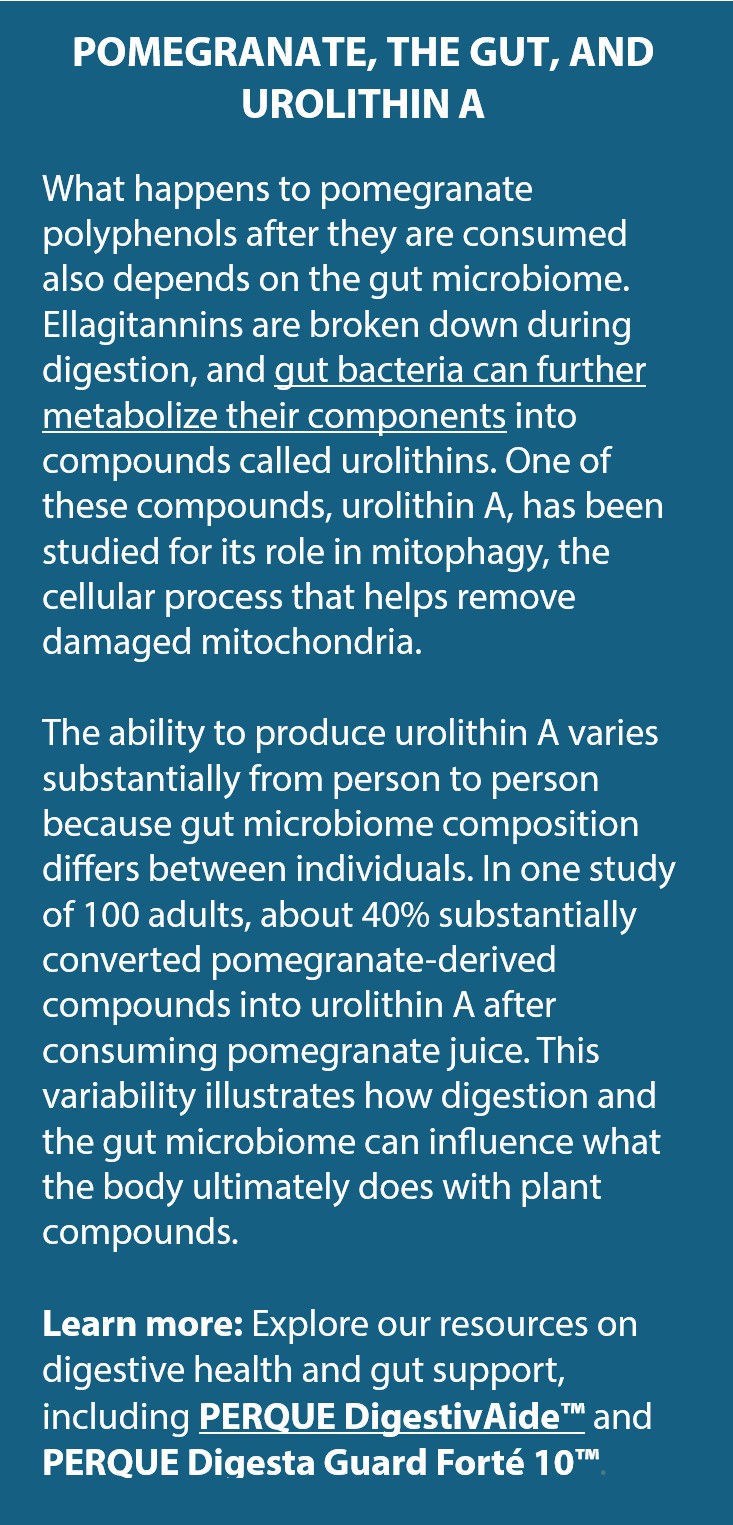
Pomegranate is rich in polyphenols, a broad family of plant compounds that includes ellagitannins. These compounds have antioxidant properties and can interact with reactive molecules, helping stabilize them and limit oxidative reactions.
Pomegranate polyphenols can also influence oxidative reactions before they generate additional free radicals. Metal ions such as iron and copper can trigger chemical reactions that produce highly reactive free radicals. As ellagitannins break down, they release ellagic acid, which binds these metal ions and reduces their availability to trigger further free-radical formation.
Pomegranate polyphenols therefore have a role in antioxidant defense that extends beyond directly interacting with reactive molecules: they can also help limit some of the chemical reactions that generate them.
OPCs and the Oxidative Chain Reaction
OPCs, short for oligomeric proanthocyanidins, are a group of polyphenols found in plants, including grape seeds. Their structure contains multiple hydroxyl groups that can donate hydrogen or electrons to reactive molecules, helping stabilize free radicals and reduce their ability to continue oxidative reactions.
This activity is especially relevant to lipid oxidation. Polyunsaturated fatty acids in cell membranes are vulnerable to free-radical attack. When a lipid radical forms, it can react with oxygen and trigger a chain reaction that produces additional lipid radicals and lipid peroxides. OPCs can donate hydrogen or electrons to these reactive molecules, helping stop the chain reaction and reduce lipid peroxidation.
This gives OPCs a direct role in the chain reaction described at the beginning of this article. By intercepting reactive molecules, OPCs can help prevent one damaged lipid from triggering damage in neighboring lipids.
Bringing It Together
Three antioxidant compounds, three distinct roles within antioxidant defense. Quercetin can influence cellular signaling through NF-κB while also directly scavenging reactive species. Pomegranate polyphenols can interact with reactive molecules and, through ellagic acid, bind metals that can participate in free-radical formation. OPCs can directly intercept reactive molecules and help terminate oxidative chain reactions, particularly lipid peroxidation.
Together, these examples show how antioxidant defense operates at several points in the process of oxidative stress. Some compounds directly interact with reactive molecules. Others can influence cellular signaling or limit chemical reactions that generate additional reactive molecules. Understanding these different roles helps explain why antioxidant activity involves more than a single chemical reaction.
PERQUE Repair Guard™
PERQUE Repair Guard™ brings these three antioxidant compounds together: quercetin dihydrate, pomegranate juice, and OPC. Together, they provide multiple routes for supporting the body’s natural antioxidant defenses and healthy cellular function.*
*These statements have not been evaluated by the Food and Drug Administration. This product is not intended to diagnose, treat, cure, or prevent any disease.